Choosing the Right Waterproofing Services NJ for Your House
A dry house rarely gets much attention. That changes the moment water shows up where it does not belong, creeping along a basement wall, lifting paint, leaving a musty smell in a finished room, or pooling in a crawl space after a heavy storm. In New Jersey, those problems are common enough that homeowners often assume they are just part of owning an older house. They are not. Moisture issues can be managed, but only when the cause is diagnosed correctly and the repair matches the conditions on the property.
That is where selecting the right contractor matters. Many homeowners start by searching for waterproofing services NJ and quickly discover a crowded field. Some companies focus on interior drainage systems. Others push exterior excavation. Some are honest specialists. Some are good sales organizations with a thin service bench behind them. The difference shows up months later, when one repair holds through a wet spring and another fails after the next hard rain.
Choosing well takes more than comparing price tags. It requires understanding what type of water problem you actually have, what methods are appropriate, and how to tell whether a contractor is solving the source of the issue or just treating the symptom.
Why New Jersey homes need a careful waterproofing approach
New Jersey has a mix of conditions that make water management tricky. There are older homes with stone or block foundations, postwar homes with partially finished basements, newer homes with poured concrete walls, and plenty of houses built on lots that were never graded especially well. Add in coastal humidity, heavy seasonal rain, freeze and thaw cycles, occasional tropical storm impacts, and high groundwater in certain areas, and you get a state where no single waterproofing method fits every house.
I have seen two homes on the same street need completely different solutions. One had water entering at the wall floor joint because hydrostatic pressure built up after long rain events. The other had what looked like a foundation leak, but the real cause was roof runoff dumping next to the house because of undersized downspout extensions. Both owners were told they needed major basement waterproofing. Only one actually did.
That is the first lesson: water takes the easiest path, but it does not always reveal the true source. A contractor who jumps straight to a standard package without investigating the property is taking a shortcut with your money.
Start with diagnosis, not product pitch
A trustworthy waterproofing company begins with observation. They ask when the water appears, whether it happens only during rain or even in dry periods, how long it lasts, whether efflorescence is present, whether there is mold odor, and whether any renovations changed airflow or drainage patterns. They look outside as much as local waterproofing NJ inside. That matters because many basement leaks start above grade.
A proper inspection should include roof drainage, grading, window wells, foundation cracks, mortar joints, sump setup if one exists, nearby hardscaping, and signs of previous repairs. In crawl spaces, it should also include vapor barriers, insulation condition, and evidence of condensation versus active seepage. If the home has a French drain already, the inspector should try to determine whether it is functioning or overwhelmed.
This part is less flashy than a sales presentation, but it tells you whether the contractor understands buildings. Good waterproofing services are not about selling the same system every time. They are about matching the repair to the path water is taking.
The biggest mistake homeowners make
The most expensive waterproofing jobs are not always the best, and the cheapest ones often cost more in the long run. The biggest mistake homeowners make is hiring based on the most persuasive explanation rather than the most credible one.
A polished estimate can sound convincing. It may include technical terms, diagrams, and a discount if you sign today. None of that proves the contractor found the right problem. I have seen homeowners pay for interior drains when their main issue was surface water running back toward the house from a sunken patio. I have also seen people spend thousands on exterior sealing when the water was coming in through a failed bulkhead door threshold that could have been rebuilt for far less.
Waterproofing is one of those trades where the right diagnosis can save a lot of money, and the wrong one can trap you in repeat repairs.
What different waterproofing methods actually do
The phrase waterproofing services covers a broad range of work. Some methods stop water before it reaches the foundation. Some relieve pressure after water reaches the foundation. Some control moisture in the air rather than liquid water in the soil. A good contractor should explain the distinction in plain language.
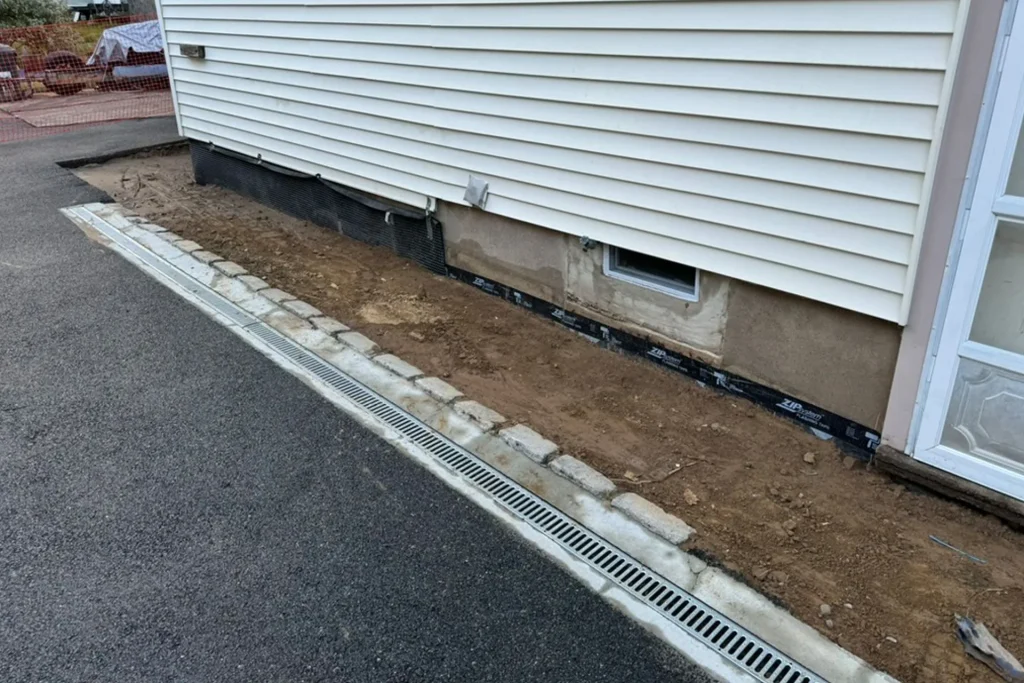
Exterior waterproofing is often the most direct method when the issue involves foundation wall penetration from outside soil moisture. It may include excavation, membrane application, drainage board, footing drain work, and grading corrections. Done well, it can be highly effective, but it is disruptive and usually more expensive. It also is not always necessary.
Interior water management systems, often installed along the perimeter of a basement, do not typically stop water from contacting the outside of the wall. They collect and redirect it before it reaches the finished floor. For homes with chronic hydrostatic pressure and limited exterior access, these systems can be practical and reliable. But they are management systems, not magic. If a contractor presents them as if they make all outside conditions irrelevant, be cautious.
Crack injection is appropriate in certain poured concrete foundations when a specific crack is the point of entry. It can work very well if the wall is otherwise sound and the crack is properly prepared. It is not a universal fix for every leak, especially where water is entering through multiple pathways or where settlement has created larger structural concerns.
Crawl space encapsulation addresses a different but related problem. In many homes, especially older ones, damp crawl spaces create odors, raise indoor humidity, and can lead to wood deterioration over time. Encapsulation, drainage improvement, and dehumidification can make a major difference, but only if standing water and exterior drainage are addressed first.
How to tell if a company is qualified
Most homeowners are not expected to know the technical side of foundation moisture control. Still, there are practical ways to separate experienced contractors from aggressive sales teams.
Look for a company that asks detailed questions and inspects both inside and outside. Notice whether they explain what they see in terms you can follow. If they recommend a system, ask why that system is appropriate for your house and what alternatives they considered. Contractors who do this work every day usually welcome specific questions because they know there is no one size fits all answer.
The proposal should describe the actual scope of work, not just a branded system name. If excavation is involved, you should understand how deep, how access will be handled, what happens to landscaping, and whether utility marking is part of the process. If an interior system is involved, ask where water goes, what kind of pump is included, whether there is battery backup, and who handles discharge line freeze protection.
One of the simplest signs of professionalism is restraint. A seasoned contractor knows when a problem is small, when it is moderate, and when it justifies major intervention. If every inspection leads to the biggest package, skepticism is healthy.
Questions worth asking before you sign
These questions tend to reveal how a company thinks, and they often expose weak proposals quickly:
- What do you believe is the primary source of the water, and what evidence supports that?
- Are you recommending an exterior solution, an interior management system, or both, and why?
- What maintenance will the system require over time?
- What exclusions are in the warranty, and what would void it?
- If this were your own house, would you choose the same scope of work?
That last question is surprisingly useful. People answer differently when they have to step out of sales mode and into owner mode.
Pay attention to the house, not just the basement
Waterproofing discussions often focus on the below grade area, but many failures begin with issues higher up. Gutters clogged with debris, short downspout discharge, negative grading, unsealed penetrations, cracked masonry at steps, and badly designed window wells all send water toward vulnerable areas. A contractor who ignores these conditions may be planning to manage water without reducing the amount that reaches the house.
That can still be a legitimate approach in some cases. Not every property can be regraded easily, and not every exterior wall is accessible because of porches, decks, driveways, or lot lines. Even so, a strong plan should acknowledge these site factors. Good waterproofing services NJ providers usually think in layers: reduce incoming water where possible, control what remains, and protect the interior environment.
This layered mindset is especially important in New Jersey neighborhoods with mature landscaping and tight spacing between homes. A beautiful yard can also hide drainage problems. Raised planting beds against the foundation, heavy mulch built up above the sill line, and old masonry walkways sloping inward are common offenders.
Red flags that deserve caution
Homeowners tend to focus on obvious red flags like rude behavior or vague pricing. In waterproofing, the more dangerous warnings are often subtler.
- The inspector spends little time outside.
- The estimate arrives before the inspection is finished.
- The company cannot explain why water appears only under certain weather conditions.
- Every crack is described as structural without supporting evidence.
- You are pressured to sign immediately for a steep same day discount.
Fast discounts are especially telling. Serious contractors know homeowners may need time to compare options because these are not impulse purchases. If the proposal changes dramatically depending on whether you sign on the spot, the pricing may have been inflated from the start.
Cost matters, but scope matters more
Homeowners naturally want a number. Waterproofing costs vary widely because the work itself varies widely. A simple crack repair may be a fraction of the cost of a full perimeter system. Exterior excavation on one wall is different from excavating an entire foundation. Crawl space work ranges from basic vapor barrier installation to comprehensive drainage and dehumidification.
In many New Jersey markets, homeowners might see repair proposals from a few thousand dollars for limited targeted work to tens of thousands for extensive exterior waterproofing and drainage correction. That range is broad because the conditions are broad. Anyone quoting without seeing the property is not giving you a meaningful number.
The right way to compare bids is to compare scope line by line. If one estimate is much lower, ask what is missing. Does it include pump discharge work, permit handling if required, backfill and cleanup, concrete patching, wall treatment, battery backup, or post installation testing? Lower cost can mean efficiency, but it can also mean omitted essentials.
Warranties are useful, but only if you understand them
A long warranty sounds reassuring. It is not the same as long term protection. Some waterproofing warranties cover only specific installed components. Some are transferable. Some require periodic maintenance. Some exclude damage caused by power loss, frozen discharge lines, improper grading, or foundation movement.
Read the actual terms. Ask who services the warranty and how quickly they respond during heavy rain periods, when many systems are under stress at the same time. If a sump pump is central to the system, ask what happens during outages. In parts of New Jersey where storms can knock out power, battery backup is not an upsell gimmick. It can be the difference between a dry basement and a cleanup job.
A contractor with experience will speak honestly about warranty limits. That honesty is a positive sign, not a weakness.
Old homes require more judgment
Older New Jersey homes often need a more nuanced approach than newer construction. Stone foundations, mixed material walls, old mortar, previous patchwork repairs, and decades of site changes create conditions that do not respond well to generic solutions.
For example, sealing the interior face of an old stone wall with the wrong product can trap moisture where it should be allowed to breathe, leading to deterioration over time. Likewise, aggressive excavation around a fragile foundation requires care. This is where contractor experience matters more than branding. Ask whether they have worked on homes similar to yours, not just homes in your zip code.
A house built in the 1920s in Essex County and a house built in the 1990s in Ocean County can both need waterproofing services, but they should not be approached the same way. The right contractor understands that age, foundation type, and site conditions all change the answer.
Finished basements raise the stakes
When a basement is unfinished, water intrusion is still a problem, but the warning signs usually show up sooner. In a finished basement, damage can stay hidden behind drywall, under flooring, and inside insulation. By the time the homeowner notices odor or staining, moisture may have been present for a while.
If you are hiring a contractor for a home with a finished lower level, ask how they plan to inspect concealed areas and whether they can identify likely entry points without immediately opening everything up. Ask what protective steps they recommend before you invest in new finishes. It is often wise to solve moisture thoroughly before any remodeling begins, not after.
I have known homeowners who spent far more replacing carpet, trim, and drywall than they spent on the waterproofing itself. The repair they regretted was not the waterproofing bill. It was finishing the space too soon after a partial fix.
Local knowledge has real value
There is a practical advantage to hiring a company that regularly handles waterproofing services NJ homeowners actually need, rather than a general operation stretched across very different regions. Local firms tend to recognize recurring patterns, high water table neighborhoods, common foundation types, and drainage issues tied to local soils and lot layouts.
That does not mean every local company is excellent, or that a larger regional firm cannot do strong work. It means local experience should count for something when the contractor is diagnosing the problem. A house near the shore behaves differently from one in a hilly inland neighborhood, and both differ from a house on a flat suburban lot with dense clay soil. The more familiar the contractor is with those realities, the better the odds of getting a practical recommendation.
When you may need more than waterproofing alone
Sometimes water intrusion is the symptom of a broader building issue. Foundation settlement, failing retaining walls, broken underground drains, or badly pitched hardscape can all contribute. In those cases, waterproofing alone may not solve the problem.
A good contractor knows when another specialist should be involved, whether that is a structural engineer, mason, drainage contractor, or plumber. Be wary of any company that claims to handle everything internally if the diagnosis clearly points beyond their core expertise. Coordination between trades can be inconvenient, but it is often how problems get solved correctly.
This is also where homeowner expectations need to stay realistic. Not every damp basement can be transformed into a perfectly controlled living space with one install. Sometimes the right answer is staged work: first exterior drainage fixes, then interior management, then humidity control, then finishing.
The final decision usually comes down to confidence
By the time you have gathered a few estimates, you may find that pricing overlaps more than expected. What often separates the best choice from the rest is not the lowest quote or the longest brochure. It is confidence in the contractor's reasoning.
Did they identify specific causes rather than speaking in generalities? Did they explain trade offs clearly? Did they acknowledge what their system does well and where it has limits? Did they show enough experience to adapt the plan to your house rather than fit your house into their standard package?
That is the kind of confidence worth paying for. Waterproofing is not glamorous work, but when it is done thoughtfully, you feel the result every season. The basement smells cleaner. The crawl space stays drier. The sump works when it should and sits quietly when it should not be needed. You stop watching the weather forecast with anxiety.
Choosing the right waterproofing services for your house in New Jersey is really about choosing a diagnosis you trust and a contractor whose method fits the building. If you keep your focus there, you are far more likely to end up with a repair that lasts, rather than a sales pitch that only sounds good on paper.
ARD Waterproofing
Address: 98 Smull Ave, West Caldwell, NJ 07006
Phone number: +12016465936
FAQ About Waterproofing Services NJ
How much can waterproofing cost?
Stephanie holds a bachelor's degree in journalism from California State University, Long Beach. Basement waterproofing costs around $13,640 on average for a 1,000-square-foot basement, but estimates can range from $12,447–$14,833, depending on the severity of the issue.
Which company is best for waterproofing?
The "best" company depends on your specific need—whether you are looking for local contractors to fix a wet basement or global manufacturers providing commercial-grade chemicals.
What is the best time to do waterproofing of your home?
As the rains subside, it makes for the perfect time to work on waterproofing your home. With no high temperatures and harsh rains to disrupt the process of waterproofing your home, you get to rapidly protect your home in time.